 ultimate-guide
How to Rank on Google Maps in 2026: 7 Proven Steps
Table of Contents
- Why Google Maps Ranking Still Drives Local Leads in 2026
- Google Business Profile Optimization Tips That Move the Needle
- The Local Ranking Factors 2026: Proximity, Relevance, and Prominence
- AI Search Impact on Local SEO: What Changed This Year
- Building Reviews, Citations, and Backlinks That Google Trusts
- Your Google Maps SEO Audit Checklist for 2026
- Common Mistakes That Sink Local Rankings (and How to Avoid Them)
- Conclusion: Turning Map Pack Visibility Into Real Leads
- Frequently Asked Questions
Last Updated: October 4, 2026
Why Google Maps Ranking Still Drives Local Leads in 2026
Roughly 42% of all local search clicks go to the Map Pack, the three-business block that sits above the organic results, according to Wolfpack Advising's local search analysis.
Google Maps ranking is the position a business earns in Google's local results based on three pillars: proximity, relevance, and prominence.
Here's the part most guides get wrong: you can't out-optimize proximity. You can only win on relevance and prominence.
| Pillar | What It Measures | Can You Control It? |
|---|---|---|
| Proximity | Distance from searcher | No (fixed address) |
| Relevance | Profile-query match | Yes (categories, keywords) |
| Prominence | Authority and reputation | Yes (reviews, links, citations) |
Google Business Profile Optimization Tips That Move the Needle
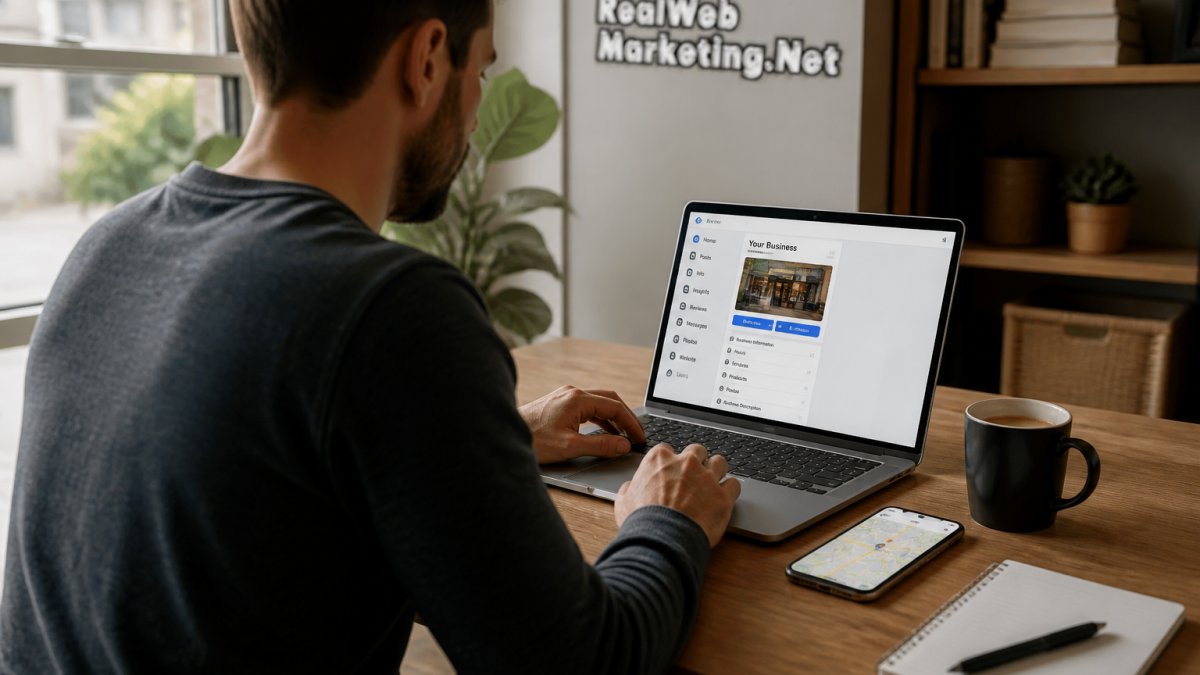
Your Google Business Profile is the foundation of every local ranking you'll earn. Get it wrong and nothing else compensates.
Primary Category and Business Name Setup
Pick the single most specific primary category available. According to GMB Radar's 2026 ranking factor breakdown, the primary category is one of the strongest signals in the local algorithm. A plumber who selects "Plumber" outranks one who picks "Contractor."
Never stuff keywords into your business name. Google suspends profiles for it, and competitors report them.
Photos, Posts, and Q&A Signals
Upload fresh photos weekly. Answer your own Q&A section with real customer questions. Post updates at least twice a month.
The Local Ranking Factors 2026: Proximity, Relevance, and Prominence
Google's local algorithm still runs on the same three pillars it has used for years, though the weighting shifts with every update. According to LocalHQ's 2026 ranking factor analysis, proximity, relevance, and prominence remain the core ranking factors, with prominence carrying more weight than ever as AI Overviews compress traditional result space.
What most guides miss is how these interact. A highly prominent business can rank from farther away than a less prominent one. That's why review velocity and backlink profile matter so much: they expand your effective radius.
AI Search Impact on Local SEO: What Changed This Year
AI Overviews, Google's "Ask Maps" conversational layer, and third-party assistants like ChatGPT and Perplexity now sit alongside the traditional Map Pack. They pull from overlapping but not identical signals, and that overlap is where most local businesses are losing visibility without realizing it.
The mechanism matters here. Traditional Map Pack rankings lean heavily on proximity, relevance, and prominence as Google computes them for a specific searcher.
What Actually Changed for Local Businesses
Three shifts are worth planning around:
- Answer engines cite sources, not just listings. When an assistant recommends a plumber, it often pulls from review aggregators, industry directories, and editorial roundups, not just your Google Business Profile. If your business only exists on Google, you're invisible to that layer.
- Conversational queries are longer and more specific. "Best emergency HVAC near me open now" behaves differently from "HVAC." Your profile description, service list, and Q&A section need to contain the natural-language phrases customers actually type or speak.
- Structured data is doing more work. Schema markup on your service pages (LocalBusiness, Service, FAQPage) helps both traditional crawlers and AI systems parse what you offer. It is not a ranking hack, it is plumbing.
Practical Optimization Steps
- Audit your entity footprint. Search your business name in ChatGPT, Perplexity, and Google's AI Overviews. Note whether you appear, what facts are stated, and whether anything is wrong. Incorrect facts are a signal problem, not a content problem.
- Strengthen corroborating sources. Ensure your business is listed accurately on the major data aggregators, industry-specific directories, and any local press or association pages that mention you. AI systems weight independent corroboration heavily.
- Write for conversational intent. Add a short FAQ block to your Google Business Profile and your website that answers the exact questions customers ask: hours, service area, emergency availability, pricing model, licensing.
- Keep NAP and hours identical everywhere. An assistant that finds three different phone numbers for your business will hedge or skip you entirely.
Voice Search and Conversational Queries
Voice assistants and conversational AI favor businesses that answer specific questions directly. "Who is the highest-rated emergency electrician in [city] open right now?" is a query your profile and site should be able to satisfy without the user clicking through three pages.
The unique angle most guides skip: AI visibility is an entity problem, not a keyword problem. You cannot keyword-stuff your way into an AI answer. You earn it by being the most clearly-defined, best-corroborated business for your category in your service area.
Building Reviews, Citations, and Backlinks That Google Trusts
Reviews, citations, and backlinks form the trust layer of local SEO. Neglect any one and your prominence score stalls.
Review Velocity and Response Strategy
Review velocity, the steady pace of new reviews arriving over time, matters more than total count. A business with 40 reviews earned steadily outranks one with 100 reviews dumped in a single month. Ask every satisfied customer, and respond to every review, positive or negative, within 48 hours.
NAP Consistency and Citation Building
Your Name, Address, and Phone number must match exactly across every directory. "Suite 200" on one site and "Ste. 200" on another creates a mismatch Google has to reconcile. Citation building on local directories, industry associations, and chamber sites reinforces your entity.
Your Google Maps SEO Audit Checklist for 2026
Run this audit quarterly. It takes about an hour and catches most ranking problems before they cost you leads.
Schedule a Free Consultation →
- Verify primary category matches your core service
- Confirm business name has no keyword stuffing
- Check NAP consistency across top 20 citations
- Review photo freshness (new uploads within 30 days)
If you'd rather hand this off, our SEO team runs this audit for clients every quarter with transparent reporting.
Common Mistakes That Sink Local Rankings (and How to Avoid Them)
The biggest mistake we see is chasing proximity with fake addresses, virtual offices, or UPS-store suites. Google's spam filters catch these, and the penalty is a suspension that can take months to reverse, sometimes permanently for repeat offenders.
Other frequent errors: letting reviews go unanswered, treating your profile as a set-it-and-forget-it asset, and ignoring the fact that competitors filing false spam reports against legitimate businesses is now common enough to plan for.
Negative SEO and Spam Defense: A Practical Playbook
Most guides tell you to "report spam" and move on. That advice is incomplete.
Step 1: Document everything before you need it.
Step 2: Identify the actual spam pattern.
Competitor spam in the Map Pack usually falls into four categories:
- Keyword-stuffed business names (e.g., "Joe's Plumbing, Emergency Plumber 24/7 Cheap")
- Fake addresses or virtual offices at shared coworking or mailbox locations
- Lead-gen listings that route calls to a call center rather than a real local business
- Duplicate listings for the same business at slightly different addresses
Each has a different reporting path. Keyword-stuffed names and fake addresses go through the Business Redressal Complaint Form.
Step 3: Report correctly, not emotionally.
Google's redressal form requires evidence, not frustration. Submit screenshots of the offending listing, the competitor's website showing a different address, and any public records that contradict their claimed location.
Step 4: Protect your own listing.
- Claim and verify every listing tied to your business name, including variations.
- Monitor your profile weekly for unauthorized edits, Google allows public suggestions, and competitors sometimes submit false changes to your hours, phone number, or category.
- Turn on Google Business Profile notifications so you are alerted to suggested edits before they go live.
- Keep your address, phone, and hours identical across your website, GBP, and top citations. Inconsistencies make you look like the spammer when a report is filed.
The Mistakes That Cost You Rankings Quietly
Beyond spam, these are the errors that erode rankings over months rather than days:
- Ignoring the Q&A section. Unanswered questions on your profile get answered by strangers, sometimes incorrectly, sometimes by competitors. Seed your own Q&A with real customer questions and answer them.
- Letting review velocity flatline. A burst of reviews followed by six months of silence signals inconsistency. Aim for a steady trickle rather than a spike.
- Neglecting mobile page speed. Most local searches happen on mobile, and slow landing pages kill the conversion even when the ranking holds.
- Using stock photos. Google's image recognition and user behavior both favor authentic photos of your actual location, team, and work.
- Forgetting service-area settings. If you serve customers at their location rather than yours, your service-area configuration needs to match your actual coverage, not a 100-mile radius you cannot service.
Conclusion: Turning Map Pack Visibility Into Real Leads
Map Pack visibility without conversion optimization wastes the ranking you earned. Once customers find you, your landing pages and follow-up have to close them. Real Web Marketing Inc. handles both sides: hands-on SEO, high-impact web design, and transparent monthly reporting that shows exactly which leads came from where. Our team has 35+ years of combined experience and direct founder involvement on every account.
Frequently Asked Questions
How can I increase my Google Maps ranking in 2026?
Focus on the three pillars Google still uses: proximity, relevance, and prominence. Claim and fully complete your Google Business Profile, pick the most accurate primary category, keep your name, address, and phone number identical everywhere online, and ask satisfied customers for reviews consistently. Roughly 42% of local search clicks go to the Map Pack, so even small gains in these areas can meaningfully increase leads. Build local citations and earn backlinks from community organizations and industry directories to strengthen prominence over time.
What role does AI play in Google Maps rankings for 2026?
AI Overviews and Google's Ask Maps feature now surface local business answers before users scroll to traditional map results. This means your profile content, reviews, and structured data need to be clear enough for AI systems to summarize accurately. Businesses that keep their service descriptions specific, respond to reviews, and maintain consistent citations across platforms are more likely to appear in AI-generated local recommendations. Traditional ranking factors still matter, but they now feed into AI-driven results as well.
Is local SEO still worth it with the rise of AI search?
Yes. AI search builds on the same signals that traditional local SEO uses: accurate business information, reviews, citations, and engagement. A well-optimized Google Business Profile with strong review velocity and consistent NAP data gives AI systems reliable information to pull from. Businesses that abandon local SEO because of AI search risk losing visibility in both traditional Map Pack results and the newer AI-generated answers. The tactics have not changed as much as the surfaces where they appear.
How do I protect my business listing from Google Maps spam?
Monitor your listing regularly for unauthorized edits, fake reviews, and competitor listings that use keyword-stuffed names. Report spam listings through the Google Business Profile redressal form and document each case with screenshots. Encourage real customers to leave detailed reviews, since authentic engagement helps Google distinguish legitimate businesses from spam. If a competitor is using your business name or address, file a complaint with evidence. Consistent review velocity and accurate citations also make your profile harder to displace.