 ultimate-guide
Digital Marketing for Local Service Businesses
Table of Contents
- Why Digital Marketing for Local Service Businesses Is Different
- Local SEO for Service Area Businesses: How to Rank Where It Counts
- Lead Generation Strategies for Service Companies That Actually Convert
- Social Media and Content Marketing for Local Authority
- Email Marketing and Customer Retention for Service Businesses
- Digital Marketing Budget for Small Business: DIY vs. Outsourcing
- Service Business Marketing Plan Template: A Practical Starting Framework
- Conclusion
Last Updated: August 28, 2026
Why Digital Marketing for Local Service Businesses Is Different
Digital marketing for local service businesses operates under fundamentally different rules than e-commerce or national chains. You don't sell online, but you get found online. Your customer's path from search to signed contract typically spans 24 hours or less. According to [Digital Applied's Local SEO(/seo-services-for-small-businesses) Statistics 2026 | digitalapplied.com], 76% of people who search for something nearby visit a business within 24 hours. That conversion window changes everything about where you should invest your budget.
Broad content marketing produces little return for a local electrician or roofing company. What works is hyper-local targeting, proximity ranking, and reputation management that converts searchers into booked appointments.
Service-Area vs. Brick-and-Mortar: What Changes in Your Strategy
A service-area business travels to the customer rather than receiving them at a fixed location. Brick-and-mortar businesses optimize for foot traffic. Service-area businesses optimize for service coverage zones, mobile-first contact actions, and trust signals that replace the in-person first impression a physical location provides. Your Google Business Profile needs to list your service areas rather than a single address. Your landing pages need click-to-call buttons above the fold. Your reviews need to reference specific neighborhoods and job types.
Local SEO for Service Area Businesses: How to Rank Where It Counts
Local SEO for service area businesses optimizes your digital presence so search engines surface your business when nearby customers search for services you provide. According to HubSpot's 2026 State of Marketing Report, 46% of all Google searches carry local intent, making organic search visibility the single highest-ROI channel available to local service companies.
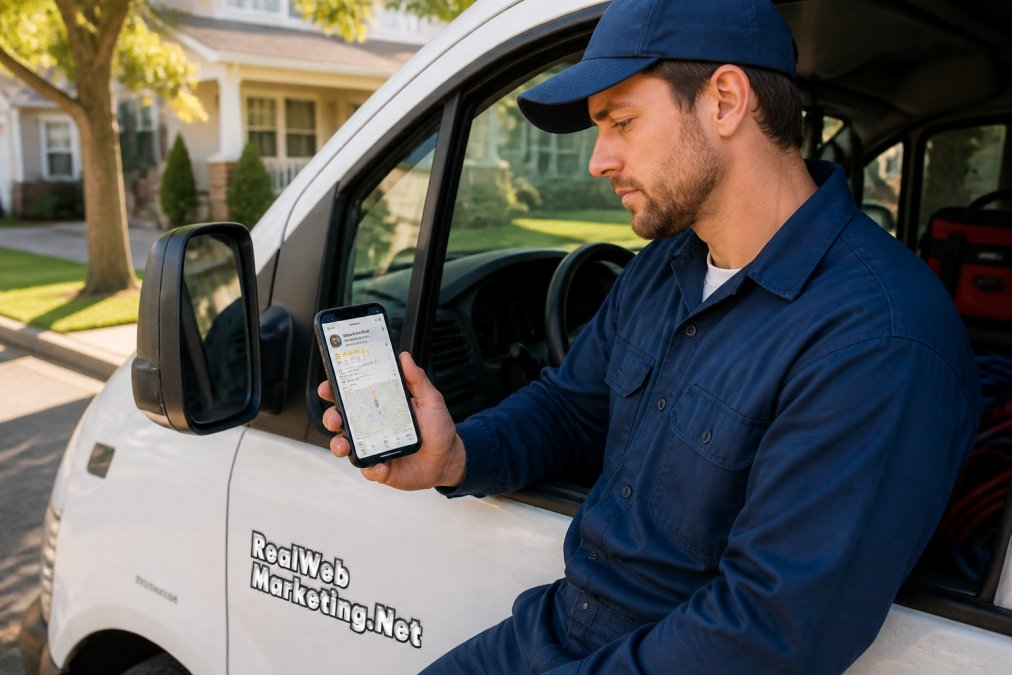
If you're not ranking in the local map pack for your primary service keywords, you're invisible to nearly half your potential market.
Google Business Profile Optimization
Google Business Profile (GBP) is a free business listing that appears in Google Search and Maps results. An optimized GBP is the single most impactful free action a local service business can take. GBP actions, including calls, direction requests, and booking clicks, increased 41% year-over-year between 2025 and 2026.
To optimize your profile effectively:
- Select the most specific primary category that matches your core service
- List all service areas by city and zip code rather than hiding your address
- Upload at least 10 current photos showing your team, vehicles, and completed work
- Enable the booking or messaging feature so customers can contact you without leaving Google
- Post weekly updates, offers, or project highlights to signal an active business
- Respond to every review within 48 hours, including negative ones
NAP Consistency, Local Citations, and Directory Listings
NAP consistency refers to having your business Name, Address, and Phone number listed identically across every online directory and social profile. Inconsistent NAP data confuses search engines and suppresses your local search ranking.
Local citations are mentions of your business on third-party sites such as Yelp, Angi, HomeAdvisor, and industry-specific directories. Each consistent citation reinforces your digital footprint and strengthens your proximity ranking signals.
A practical starting checklist for citation building:
- Google Business Profile (verified)
- Bing Places for Business
- Yelp Business
- Angi (formerly Angie's List)
- HomeAdvisor / Thumbtack (for home services)
- BBB (Better Business Bureau)
- Facebook Business Page
- Apple Maps Connect
- Industry-specific directories relevant to your trade
Audit your existing citations quarterly to catch phone number changes or address updates that create ranking inconsistencies.
Lead Generation Strategies for Service Companies That Actually Convert
Most lead generation advice focuses on traffic volume. The real problem for local service businesses is conversion rate optimization: turning the visitors you already have into booked appointments.
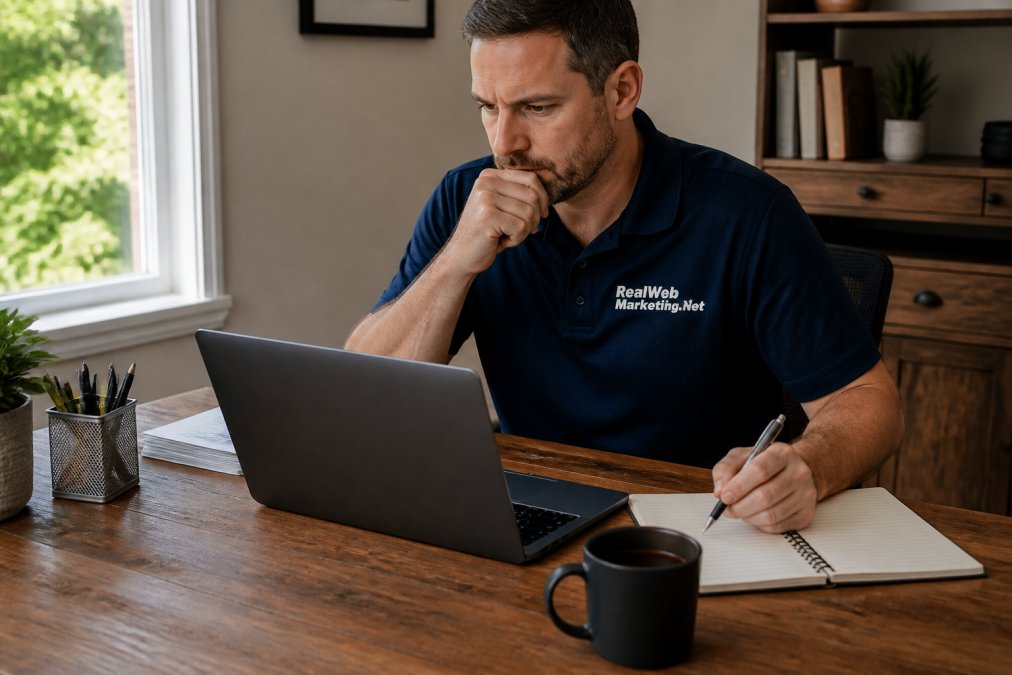
Southern Trust Home Services earned a 90% booking rate after implementing Local Services Ads through Google, demonstrating how the right ad format paired with a frictionless booking process drives customer acquisition.
Geo-Targeted PPC Ads and Landing Page Optimization
Geo-targeted PPC ads are paid search placements restricted to specific geographic zones, ensuring your ad budget reaches only customers within your actual service area. The average Google Ads cost per click in 2026 is $5.42, making precise targeting essential to maintaining positive ROI.
The most common mistake is sending paid traffic to a generic homepage instead of a dedicated landing page. An effective local service landing page includes:
- A headline that names the specific service and service area ("Emergency Plumbing Repair in [Your City]")
- A click-to-call phone number in the top 100 pixels of the page
- Three to five customer reviews with full names and locations
- A simple contact form with no more than three fields
- A clear statement of your response time or availability
Google Local Services Ads appear above standard PPC ads and carry a "Google Guaranteed" badge that functions as instant social proof. For home service businesses, they typically deliver lower cost per lead than standard search ads.
Online Reviews and Reputation Management
Online reputation management is the practice of systematically generating, monitoring, and responding to customer reviews to build trust and improve local search ranking. According to Digital Applied's 2026 Local SEO research, 87% of consumers read online reviews for local businesses before making a contact decision.
Review velocity, the rate at which new reviews accumulate, is a local ranking signal. A business with 200 reviews that hasn't received a new one in six months ranks below a competitor with 80 reviews that receives five new reviews per month.
The most effective review generation system:
- Send a review request via SMS within two hours of job completion
- Include a direct link to your Google Business Profile review form
- Follow up once by email if no review is received within 48 hours
- Train technicians to verbally ask satisfied customers before leaving the job site
Never incentivize reviews with discounts or gifts. The FTC's guidelines on endorsements prohibit undisclosed compensation for reviews, and Google's policies will remove flagged reviews.
| Strategy | Primary Goal | Best For | Timeline to Results |
|---|---|---|---|
| Google Business Profile | Proximity ranking | All local service businesses | 30-60 days |
| Local SEO / Citations | Organic search visibility | Established businesses | 3-6 months |
| Google Local Services Ads | Immediate lead generation | Home services, legal, medical | 1-2 weeks |
| Standard PPC | Targeted customer acquisition | Competitive service markets | 2-4 weeks |
| Review Generation | Trust and ranking signals | All local service businesses | Ongoing |
| Email Marketing | Customer retention | Businesses with existing clients | 30 days |
Social Media and Content Marketing for Local Authority
The biggest mistake service businesses make on social media is treating it like an advertising channel. According to Socioapt's 2026 small business social media data, 73% of businesses now prioritize organic social media to build authentic connections rather than broadcasting paid messages.
What actually builds brand awareness and local authority on social media: before-and-after project photos with location tags, short videos of your team explaining common problems customers face, posts that answer the questions your phone rings about every week, and customer testimonials shared with permission. effective marketing tips.
Content marketing for local service businesses doesn't require 3,000-word articles. A consistent posting schedule of practical, location-tagged content builds a digital footprint that compounds over time. Content marketing returns approximately $3 for every dollar spent, compared to roughly $1.80 for paid advertising.
Email Marketing and Customer Retention for Service Businesses
Email marketing is the most underused channel in local service business marketing. Email marketing delivers an average return of $36 to $42 for every dollar spent. Automated email campaigns achieve an average open rate of 30.21% and a click rate of 4.66%.
The primary use case for local service businesses isn't lead generation, it's customer retention. Your past customers already trust you. An annual HVAC tune-up reminder, a spring landscaping offer, or a winter plumbing checklist keeps your business top-of-mind before they search for a competitor.
A basic email retention system for service businesses:
- Collect email addresses at every job completion and quote request
- Send a thank-you email within 24 hours with a review request link
- Schedule a service anniversary email 11 months after each job
- Send two to three seasonal newsletters per year with maintenance tips
- Segment customers by service type to send relevant offers only
Marketing automation handles steps two through five without manual effort once configured.
Digital Marketing Budget for Small Business: DIY vs. Outsourcing
The digital marketing budget question for small service businesses comes down to one honest calculation: what is your time worth per hour, and what does each new customer generate in revenue?
DIY digital marketing costs less in dollars but more in time. Outsourcing costs more in dollars but frees you to do the work only you can do.
A practical framework for the decision:
| Task | DIY Feasibility | Outsource When |
|---|---|---|
| Google Business Profile setup | High | You have multiple locations |
| Social media posting | High | Posting becomes inconsistent |
| Review request system | Medium | Volume exceeds 10 jobs/week |
| SEO / content creation | Low | Competing in a crowded market |
| Google Ads management | Low | Budget exceeds $1,500/month |
| Website design | Low | Existing site is over 4 years old |
The outsource threshold for Google Ads is especially important. At lower spend levels, the management fee may exceed the efficiency gains. Above $1,500 to $2,000 per month in ad spend, professional management typically pays for itself through better targeting, quality scores, and landing page optimization.
AI-Driven Tools That Cut Costs Without Cutting Results
AI workflows are expected to dominate local business marketing in 2026, moving from experimental automation to integrated efficiency engines. For service businesses operating on tight margins, this matters.
Specific areas where AI tools deliver measurable value:
- Review response drafting: AI writes first drafts of review responses, which a manager approves and posts. Time savings: 30-60 minutes per week.
- Social media caption generation: AI generates location-tagged post captions from project photos. Reduces content creation time by roughly 70%.
- Email subject line testing: AI-powered email platforms predict open rates before sending, improving campaign performance without additional spend.
- Chat and lead capture: AI chat tools on your website capture lead information after hours, preventing the loss of prospects who won't call back.
Service Business Marketing Plan Template: A Practical Starting Framework
A service business marketing plan is a documented, prioritized set of channels, tactics, and goals that aligns your marketing activity with your revenue targets.
Monthly Marketing Activity Template
| Priority | Channel | Activity | Time/Budget | Goal |
|---|---|---|---|---|
| 1 | Google Business Profile | 4 posts, respond to all reviews | 2 hrs/month | Maintain proximity ranking |
| 2 | Review generation | SMS request after every job | Automated | 4+ new reviews/month |
| 3 | Google Local Services Ads | Active campaign, optimized weekly | Budget TBD | 10-20 new leads/month |
| 4 | 1 newsletter or seasonal offer | 2 hrs/month | Repeat bookings | |
| 5 | Social media | 8-12 posts with project photos | 3 hrs/month | Brand awareness |
| 6 | Local SEO | Citation audit, content update | 2 hrs/quarter | Organic ranking growth |
90-Day Launch Sequence:
- Days 1-14: Verify and fully optimize your Google Business Profile. Audit all existing citations for NAP consistency. Set up a review request SMS workflow.
- Days 15-30: Launch a Google Local Services Ad campaign if applicable to your trade. Build or refresh a dedicated service landing page with click-to-call and a short contact form.
- Days 31-60: Establish a social media posting schedule. Collect past customer email addresses and configure a basic automated retention sequence.
- Days 61-90: Evaluate lead volume and cost per lead from each active channel. Shift budget toward what is converting. Identify one content piece to build local search authority.
Real Web Marketing Inc. builds these plans for service businesses across construction, home services, and professional trades. Clients have described the relationship as having a genuine online partner, not just another vendor.
Digital marketing for local service businesses rewards consistency over complexity. The businesses that win local search aren't running the most sophisticated campaigns. They're the ones showing up reliably in the right places with the right trust signals.
Frequently Asked Questions
Q: What is the best way to market my service business locally?
A: The highest-return starting point is a fully optimized Google Business Profile combined with local SEO targeting your service area. 46% of all Google searches have local intent, and 76% of nearby searches lead to a visit within 24 hours. Pair that with a steady flow of customer reviews, consistent NAP data across directories, and geo-targeted Google Ads for competitive keywords. Together, these channels build both immediate lead flow and long-term organic search visibility without requiring a massive budget.
Q: How do I rank my service-area business on Google Maps?
A: Ranking on Google Maps depends on three factors: relevance, distance, and prominence. Claim and fully complete your Google Business Profile, selecting accurate service categories and adding photos regularly. Build local citations on reputable directories with consistent name, address, and phone data. Actively collect reviews, 87% of consumers read them before choosing a local business. Add location-specific pages to your website with schema markup, and ensure your site loads fast on mobile, since mobile-first indexing directly affects proximity ranking in map results.
Q: How much should a small service business spend on digital marketing?
A: B2B service companies often allocate a percentage of their revenue to marketing. For a small service business, actual spend depends on your market's competitiveness and your growth goals. Channels like local SEO and email marketing can deliver strong ROI at lower spend, while Google Ads at an average $5.42 per click requires tighter budget management.
Q: What is the 70/20/10 rule in digital marketing?
A: The 70/20/10 rule suggests allocating 70% of your marketing budget to proven channels that reliably generate leads, 20% to emerging tactics you're testing, and 10% to experimental or high-risk ideas. For local service businesses, the 70% typically covers local SEO, Google Ads, and email marketing. The 20% might go toward social media campaigns or video content. The 10% funds experiments like geo-fencing or AI-driven personalization. This structure keeps customer acquisition predictable while leaving room to adapt as digital marketing for local service businesses evolves.
Q: Do I need a website if I already have a Google Business Profile?
A: Yes. A Google Business Profile drives discovery, but your website converts visitors into leads. A 2026 survey found 81% of consumers say it's important for businesses to have a website, and many will look elsewhere if they can't find one. Your website also gives you control over landing page optimization, conversion rate optimization, and content marketing, none of which are possible through a Business Profile alone. Think of the Profile as the front door and your website as the room where the sale actually happens.
Q: How do lead generation strategies differ for service-area businesses versus storefronts?
A: Service-area businesses face a unique challenge: they have no physical address customers can walk into, so proximity ranking on Google Maps works differently. Instead of a single location, you need service-area pages for each city or zip code you cover, supported by hyper-local content and consistent citations that reference your coverage zone rather than one address. Geo-targeted ads should be set to your actual service radius, not just your home base. Review velocity matters more too, since potential customers can't visit before deciding, social proof is their only preview of your work.
Real Web Marketing Inc. works with local service businesses that are tired of paying for marketing they can't measure. If your Google Ads spend feels like a black box, your website isn't generating calls, or you're invisible in local search, the issue is almost always a strategy problem, not a budget problem. Schedule a free consultation with the Real Web Marketing Inc. team to get a clear picture of where your leads are going and what it actually takes to grow them.
This article was written using GrandRanker