 Ultimate guide
HVAC Customer Referral Program Best Practices in 2026
Quick Summary
HVAC customer referral program best practices start with a measurable goal, such as a set number of referred replacement jobs per quarter, and a reward sized from your margins rather than from generosity. Ask for referrals right after a job goes well, and track every referred job from first request through final payment. Tracking each stage is what shows whether the program is actually profitable.
- Set a goal that names a number, a service line, and a timeframe.
- Size rewards from gross margin on the job, not from total revenue.
- Ask for referrals right after a job goes well, while the customer is satisfied.
- Assign each referrer a unique code or link and record it on the customer record.
- Pay rewards only after the referred job is completed and paid.
Table of Contents
- Why an HVAC Customer Referral Program Pays Off
- Setting Goals and Defining Success for Your HVAC Referral Program
- Choosing HVAC Referral Program Incentives That Fit Your Margins
- How to Ask HVAC Customers for Referrals at the Right Moment
- HVAC Referral Request Email Template and Scripts
- HVAC Referral Program Examples by Service Line
- Tracking Referrals, Rewards, and Program Performance
- Start Your HVAC Referral Program With a Clear Plan
- Frequently Asked Questions
HVAC Customer Referral Program Best Practices in 2026
Last Updated: November 18, 2026
Referrals are one of the cheapest ways for an HVAC company to win new jobs, and a strong hvac customer referral program best practices approach helps turn that trust into steady work, because a referred homeowner arrives already trusting the business.
Below, we walk through the practices that make an HVAC referral program work, from goal setting to tracking.
Why an HVAC Customer Referral Program Pays Off
A referral program gives your existing customers a reason to recommend you, and gives you a structured way to reward them. To see how referrals fit alongside other growth channels, explore digital marketing for local HVAC companies. For HVAC companies, the value is concentrated in a few places: replacement jobs, maintenance agreements, and emergency calls that come from neighbors who saw a technician at work.
Setting Goals and Defining Success for Your HVAC Referral Program
Before you choose a reward, decide what your hvac customer referral program best practices should produce. A useful goal names a number, a service line, and a timeframe, such as "eight referred replacement jobs per quarter" or "referrals covering 20% of maintenance-plan sign-ups." Readers who want to also strengthen the online reviews that make referred prospects trust you can read how to get more Google reviews for service businesses.
Define success in terms you can measure from your job-management system:
- Referred leads received per month
- Referred jobs booked and completed
- Revenue from referred jobs, by service line
Readers planning this step often want a deeper walkthrough of program design, and our guide on how to build a local referral program for service businesses covers it in more detail.
Choosing HVAC Referral Program Incentives That Fit Your Margins
Most HVAC owners pick a referral reward by gut feel, a gift card here, a bill credit there, and then wonder why the program either bleeds margin or generates no referrals. The fix is to set the reward from unit economics, not from a sense of generosity. This is the step most referral guides skip, and it is the one that determines whether your program is a profit center or a quiet cost.
Start With Your Customer Acquisition Cost
Your referral reward should be compared against what you already pay to acquire a customer. If your marketing spend, dispatch overhead, and sales time add up to a known cost per booked job, a referral reward that lands below that number is still a bargain, you are buying a warmer lead for less than your existing channels cost.
Anchor the Reward to Gross Margin, Not Revenue
Revenue is the wrong denominator. What matters is the gross profit on the job the referral produces. If a maintenance visit carries a thin margin, a reward sized for a replacement job will lose money on every maintenance referral. Size the reward to the job, and set a separate, lower reward for low-margin service lines.
Use Average Job Value and Lifetime Value Together
Average job value tells you what a single referred job is worth; lifetime value tells you what a referred customer is worth over years of maintenance, repairs, and eventual replacement. To understand this measure in more depth, see how to improve customer lifetime value for small businesses. A referred customer who signs a maintenance agreement and stays for a decade is worth far more than one emergency call, and that difference can justify a larger upfront reward for referrals that convert into ongoing relationships.
Build a Simple Reward Budget
Set a quarterly referral budget as a percentage of expected referred revenue, then track actual reward payouts against it. If payouts run ahead of referred gross profit, the reward is too rich or the wrong service lines are being referred. If payouts are far below budget while referrals are also low, the reward is too weak to motivate.
One-Sided Versus Two-Sided Rewards
A one-sided reward pays only the referring customer. A two-sided reward pays both the referrer and the new customer, usually with a discount on the first service.
Watch out: a reward that looks small per referral can exceed the gross profit on the job once you add administration time, duplicate payouts, and discounts stacked on top of the referral credit.
Document the Terms Before You Launch
Write down who is eligible, when the reward is paid, what happens if the referred job is cancelled or refunded, and how duplicates are handled. Payout timing matters: paying on the first completed job is simpler, while paying in two stages protects you when a referred customer does not convert. Keep the terms short enough that a customer can read them at the door, and have a qualified professional review tax and recordkeeping questions before rewards go out.
How to Ask HVAC Customers for Referrals at the Right Moment
Timing matters more than wording. The best moment to ask is right after a job goes well, when the customer has just seen the work and is still satisfied.
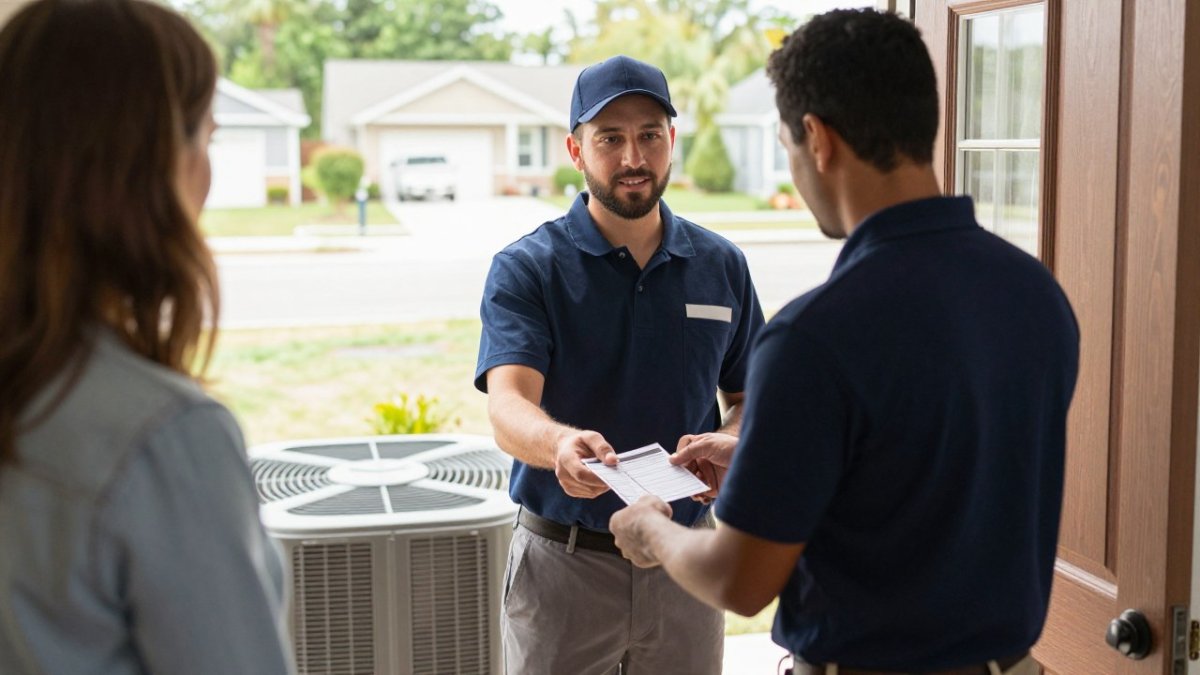
Keep the ask short and specific. Rather than asking customers to "spread the word," name the kind of person you want to help: neighbors with older systems, friends who mentioned a comfort problem, or family members who manage rental properties.
HVAC Referral Request Email Template and Scripts
A follow-up email reaches customers who were not ready to refer at the door. Keep it brief, personal, and easy to act on:
Subject: Thanks for having us out, [Customer First Name]
Hi [Customer First Name], thanks for trusting [Company Name] with your [service performed] on [date]. If you know a neighbor or friend who could use the same kind of help, we would be grateful for an introduction. Just reply with their name and number, or share this link: [referral link]. Thanks again for your business.
[Technician or Owner Name], [Company Name]
For in-person requests, a short script helps technicians stay consistent: "We're glad the system is running well. If anyone you know is dealing with a similar problem, we'd appreciate you passing along our name. Here's a card with your referral reward details."
HVAC Referral Program Examples by Service Line
Different service lines suit different referral structures. Maintenance-plan referrals often work well with a recurring-service credit, since the customer's value continues over time. Replacement referrals tend to carry larger job values, which can justify a larger one-time reward.
Map each program to a specific service line, measure it separately, and expand only the ones that produce profitable jobs.
Tracking Referrals, Rewards, and Program Performance
A referral program is only as good as its tracking. Without a reliable way to connect a referral to a booked and completed job, you cannot tell which referrers produce revenue, which service lines pay off, or whether rewards are being paid on jobs that never happened. The setup below is the part most guides gloss over, and it is where referral programs quietly fail.
Give Every Referral a Unique Identifier
Assign each referring customer a unique referral code or link, and record that code on the new customer's record at the moment of first contact. For phone calls, the office staff should ask how the caller heard about you and enter the code or referrer name into the source field. For online forms, a referral link can pre-fill the source.
Use a Dedicated Source Field in Your CRM
Create a referral source field in your job-management or CRM system and make it a required field on every new customer record. Use consistent values, for example, a distinct entry for each referrer code plus a general referral category, so reports can roll up by referrer and by service line. If your system supports tags, tag the resulting job with its source and the service line, which makes it possible to compare referred jobs against non-referred jobs on the same report.
Handle Offline and Word-of-Mouth Referrals
Many referrals arrive without a code, a neighbor mentions your name, or a customer tells a technician that a friend sent them. Train the office staff to ask a simple question at intake: "Did someone refer you to us?" and to capture the referrer's name even when no code exists. Record these as offline referrals with the referrer noted, so the referrer can still be credited and the source is not lost.
Prevent Duplicate and Invalid Payouts
Duplicate referrals happen when two customers claim the same new lead, or when a customer refers someone who was already in your pipeline. Set a rule for first-claim credit and check new referrals against existing customer records before paying. Also hold rewards until the referred job is completed and paid, and reverse the reward if the job is cancelled or refunded.
Connect the Referral to the Completed Job
The chain that matters is referral received, job booked, job completed, invoice paid, reward issued. Build a report that shows each stage and the drop-off between them. If many referrals are received but few are booked, the problem may be follow-up speed or fit. If many are booked but few complete, the problem may be scheduling or pricing.
Measure Program Performance Monthly
Review the numbers monthly and compare referred jobs against reward cost. Our guide on ranking on Google Maps explains how local visibility can support the leads your referral program sends your way.
Watch out: if the source field is optional or inconsistently filled, your reports will undercount referrals and you may cut a program that is actually working.
The table below summarises the tracking chain the article describes, from first referral to reward payout.
| Stage | What to check | Why it matters |
|---|---|---|
| Referral received | Unique code or link recorded | Traces the lead to its referrer |
| Job booked | Source field filled on the record | Shows which referrers produce bookings |
| Job completed | Status updated after the visit | Ties the reward to real work |
| Invoice paid | Payment confirmed | Confirms the revenue is collected |
| Reward issued | Duplicates and refunds checked | Prevents invalid payouts |
Start Your HVAC Referral Program With a Clear Plan
A strong referral program starts with clear goals, a reward that fits your margins, and a simple process your technicians will actually follow. Begin with one service line, set a measurable target, and track every referred job from the first request to the final invoice.
If you want help building the marketing side of this, Real Web Marketing Inc. can help you plan a program and the local visibility behind it. Our SEO services and web design services are a good place to start, and we are happy to talk through your goals on a free consultation.
Frequently Asked Questions
What are the best practices for an HVAC customer referral program?
Set a clear goal, such as booked jobs or new maintenance plan sign-ups. Choose a reward that is simple and affordable, like a service discount or gift card. Ask customers at the moment of satisfaction, usually right after a completed job and a working system. Make sharing easy with a referral link, code, or card, and track every referral in your CRM so you can see which rewards produce paid work. Review results regularly and adjust the offer based on what your team and customers respond to.
When should HVAC companies ask customers for referrals?
The best time is after a completed job when the customer has confirmed the system is cooling or heating properly. Technicians can mention the program at the close of the visit, and a follow-up email or text can reinforce it a few days later. Avoid asking during an emergency repair or when a customer is upset about cost, since satisfaction is what drives referrals.
What referral incentives work well for HVAC customers?
Service discounts, credits toward a maintenance plan, and gift cards are common choices. Two-sided rewards, where both the referring customer and the new customer receive something, often increase participation. Set a reward budget based on the average value of a booked job so each referral remains profitable. Check your local rules for promotional gift cards and discounts before launching, and keep reward terms written clearly in your program documentation.
How can an HVAC company track referrals and reward customers?
Assign each customer a unique referral code or link and record the referral source for every new lead in your CRM or job management software. Train office staff to ask new customers who referred them and to log the answer at booking. Track the number of referred leads, booked jobs, and paid work against reward costs each month. Fulfill rewards promptly after the referred job is paid, and build a simple process to prevent duplicate or fraudulent referrals.
What are some catchy HVAC referral program slogans?
Slogans work best when they are short and tie the offer to a clear benefit. Examples include 'Refer a neighbor, earn a service credit,' 'Keep your friends cool and your savings growing,' and 'Share the comfort, share the reward.' Test two or three options on your website, email, and invoices to see which one drives more referrals before committing to a single message.
How long should a referral request email be?
A referral request email should be brief, usually three to five sentences. Thank the customer for their business, name the specific reward, explain how to share a referral link or code, and include a clear call to action. Avoid long explanations of program terms, which you can link to instead. Send the email a few days after the completed job, when the customer has had time to confirm the work met their expectations.
Do HVAC referral programs need to be reviewed regularly?
Yes. Review program performance at least quarterly, looking at referral volume, booked jobs, reward costs, and which service lines generate the most referrals. Seasonal demand for cooling and heating can shift results, so compare similar periods year over year. Adjust reward amounts, timing, and messaging based on what the data shows rather than assumptions.